This is a warning to the community living within the Local Government Area of Armidale Regional Council (LGA)
Most people have probably never heard of Armidale Regional Council‘s proposed Future Fund Board of Guardians.
That may soon change.
The Board of Guardians is being proposed to oversee the investment and management of renewable energy community benefit contributions associated with wind farms and other renewable energy developments.
On the surface, that sounds sensible. If significant amounts of money are flowing into the region, it makes sense to invest those funds wisely and preserve them for future generations.
The issue is not the concept.
The issue is the governance.
What many residents may not realise is that the Future Fund could eventually be responsible for managing millions of dollars in community benefit contributions. Decisions made now could influence how that money is invested and distributed for decades.
That is why the proposed governance framework deserves close public attention.
The Board of Guardians is not simply an advisory committee. It would have substantial influence over investment decisions and recommendations about how future earnings are allocated. Yet many residents remain unaware that ARC is currently consulting on the rules that will govern it.
The community should be asking some basic questions:
- Who controls the money?
- Who decides where it is invested?
- Who decides what projects receive funding?
- What safeguards exist to prevent conflicts of interest?
- How transparent will the process be?
- How much information will the public actually see?
At present, many of those answers remain unclear.
One concern is that the Mayor and General Manager of ARC would be automatic members of the Board of Guardians. Some may see this as practical, while others may question whether a fund managing significant public-purpose money should have greater independence from ARC‘s political and administrative leadership.
The issue is not whether individuals can be trusted. The issue is whether the structure itself is strong enough to maintain public confidence over time.
Another concern is conflict-of-interest management.
Whenever large amounts of public money are involved, strong safeguards are essential. The Future Fund could influence investment decisions, community grants, infrastructure projects and future spending priorities. Those decisions may involve developers, consultants, contractors, community organisations and advocacy groups.
Yet the draft appears to provide only limited detail about how actual, potential and perceived conflicts of interest will be managed.
Many residents would reasonably expect public registers of interests, conflict declarations, gifts, benefits and recusals. They may also expect clear rules requiring members with conflicts to step aside from discussions and decisions.
Good governance is not just about preventing wrongdoing. It is about ensuring decisions can withstand public scrutiny.
Transparency is another major issue.
The draft proposes that Board meetings will not be conducted in public and includes broad confidentiality provisions.
There may be legitimate reasons for confidentiality when discussing investment strategies or legal matters. However, when community benefit money is involved, transparency should be the default wherever possible.
The residents of Armidale LGA has a legitimate interest in knowing how much money has been received, how it is invested, what returns are achieved, what conflicts are declared and what projects ultimately receive funding.
Transparency builds trust. Secrecy erodes it.
Another concern is the lack of a detailed framework explaining how future projects will be selected.
The draft contains considerable detail about investing money but far less detail about how the benefits will be distributed.
- What projects will qualify?
- Who decides?
- Will there be public consultation?
- Will communities most directly affected by renewable energy developments receive priority consideration?
The answers are not yet clear.
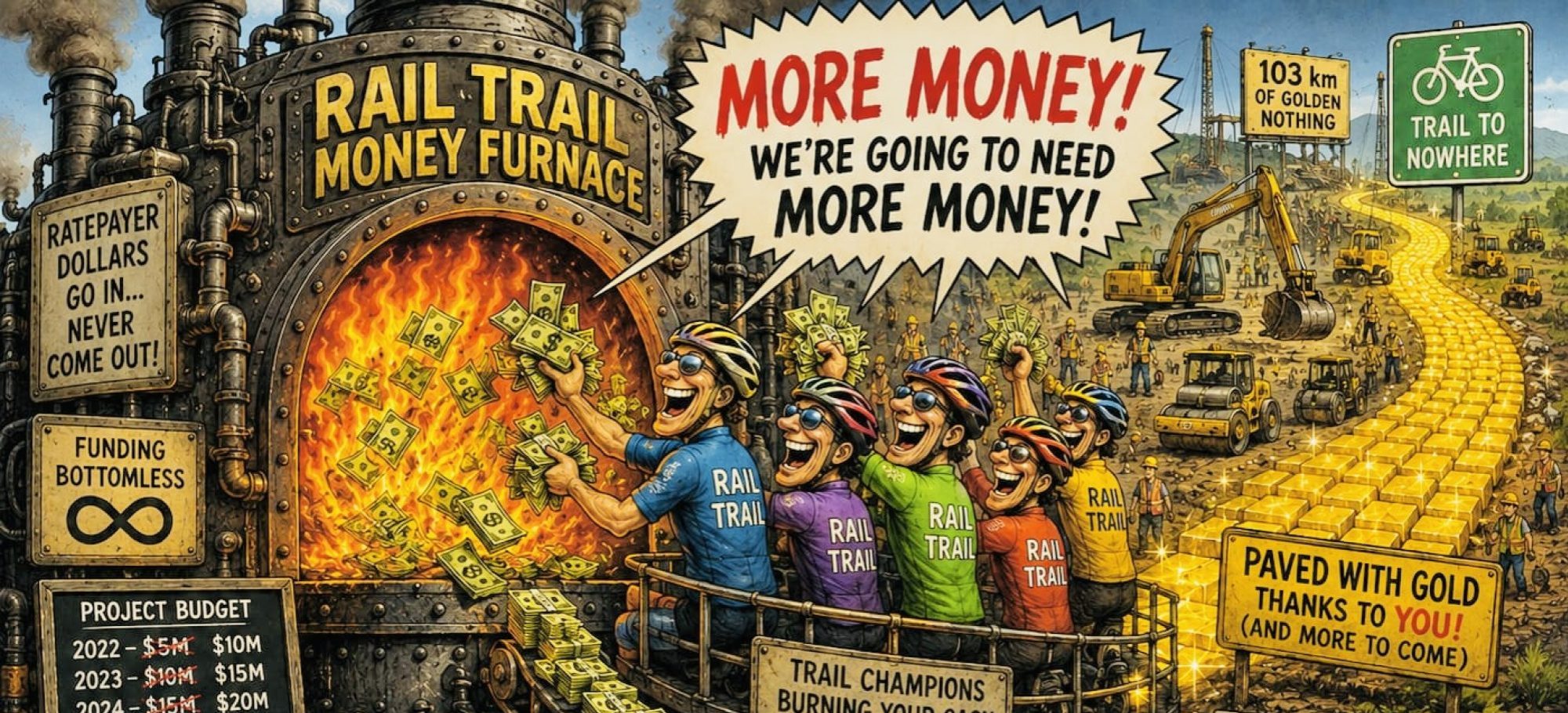
Questions also remain about whether Future Fund money could potentially be used for controversial projects, including the New England Rail Trail.
Regardless of where people stand on that debate, the broader principle remains the same: the community should know what types of projects may be eligible for funding before the framework is adopted.
There are also concerns about accountability.
The draft does not appear to require dedicated Audit, Risk and Improvement Committee oversight, a specific Future Fund risk register or detailed fraud and corruption controls.
For a fund that may eventually hold substantial public-purpose money, many residents may expect stronger safeguards from the beginning rather than after problems arise.
None of this means the Future Fund is a bad idea.
In fact, many people would strongly support the principle behind it. Renewable energy developments are bringing major change to the region, and it is reasonable that communities should receive long-term benefits.
The real question is whether the governance arrangements are strong enough to protect those benefits.
The Board of Guardians may ultimately become one of the most influential bodies established by Council.
That is precisely why the community should pay attention now.
The money belongs to the community.
The governance should earn the community’s trust.
And trust is built through transparency, accountability, independence and meaningful public oversight.
Tanya Langdon
Deni McKenzie OAM
Dr Siri Gamage
Jack Arnold
New England Network
8-jun-2026